
❖ Video

❖ Audio (Message)
Remain in Jesus
(John15:1-17)
Mari Yoshino
The new year has begun. How are you feeling? For the first worship service of the year, I always choose a Bible passage I want to keep in mind throughout the year. This time, I felt a passage continuing from the Gospel of John was fitting. It’s a well-known passage from Jesus’ words: “I am the vine; you are the branches.”
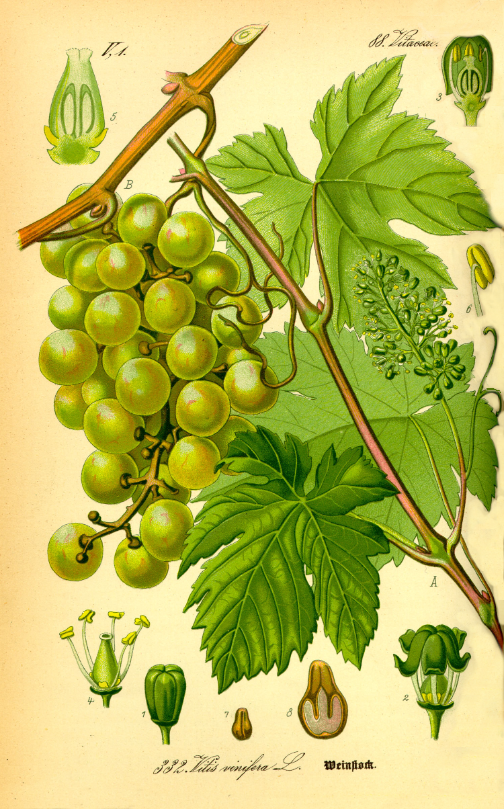
In the Old Testament, the vine represents the people of Israel and is often spoken of in a lamenting context, signifying that despite being planted and nurtured by God, it failed to bear fruit. Jesus, of course, knew this background well. He likened Himself to the vine, signifying that He was the true vine bearing fruit according to God’s desire.
Today, through this passage, I want to keep in mind that no matter what circumstances we face over the coming year, the only thing we need to do is “remain in Jesus.” It’s a bit lengthy and complex, so we’ll read it in two parts. First, let’s read verses 1-10.
A. “Remain in me.” (1-10)
1 “I am the true vine, and my Father is the gardener. 2 He cuts off every branch in me that bears no fruit, while every branch that does bear fruit he prunes so that it will be even more fruitful. 3 You are already clean because of the word I have spoken to you. 4 Remain in me, as I also remain in you. No branch can bear fruit by itself; it must remain in the vine. Neither can you bear fruit unless you remain in me. 5 I am the vine; you are the branches. If you remain in me and I in you, you will bear much fruit; apart from me you can do nothing. 6 If you do not remain in me, you are like a branch that is thrown away and withers; such branches are picked up, thrown into the fire and burned. 7 If you remain in me and my words remain in you, ask whatever you wish, and it will be done for you. 8 This is to my Father’s glory, that you bear much fruit, showing yourselves to be my disciples. 9 As the Father has loved me, so have I loved you. Now remain in my love. 10 If you keep my commands, you will remain in my love, just as I have kept my Father’s commands and remain in his love.
1. What does it mean to remain in Jesus?
Jesus tells us, “Remain in me.” While the Japanese translation uses “be connected,” the English uses “remain” or “abide,” which is a more literal translation of the original language. What does it mean to remain in Jesus, or to abide in him?
A helpful hint in considering this is Jesus’ words: “I also remain in you.” Verse 5 also says, “if you remain in me and I in you, you will bear much fruit.” We see that us remaining in Jesus and Jesus remaining in us are two sides of the same coin. I believe this shows that the relationship of trust between us and Jesus is mutual. Even if Jesus loves us, there is no relationship of trust between us and Him if we do not love Him in return. But considering that Jesus died on the cross for everyone, loving all people and reaching out His hand to them, the only thing we need to do to remain connected to Him is to take that hand. That is the only thing we must do, and it is all we can do.
In verse 9, Jesus says, “Remain in my love.” Jesus’ love is the love of the cross. It is the love that gave His life for us on the cross and redeemed our sins. To remain in that love means to stand on the fact that Jesus died for us, and to entrust our entire walk to the Jesus who has compassion on us and forgives us. All we can do is come before Jesus with nothing, and take the hand He extends to us.
But only if we can do that, Jesus will firmly hold us, meet our needs, and surely guide us. As long as we don’t let go of Jesus’ hand, He will never let go of ours. In that sense, the words “remain in me” can be rephrased as “don’t let go of my hand; trust in my love and be at peace.”
Now, there is one more point I want to highlight in this first half. It is the stern words spoken in verses 2 and 6. Let us read these two verses again.
2. What does it mean that the Father prunes us?
2 He cuts off every branch in me that bears no fruit, while every branch that does bear fruit he prunes so that it will be even more fruitful.
6 If you do not remain in me, you are like a branch that is thrown away and withers; such branches are picked up, thrown into the fire and burned.
What it means to bear fruit is something we will consider later in the latter half, but what these two verses speak of is this: branches that do not bear fruit will be cut off by God, while branches that do bear fruit will be pruned by God so that they may bear even more fruit.
The idea that there are branches that God discards is terrifying. From Jesus’ choice of words, this seems to refer to the final judgment that will take place at the end of the world. At that time, it is said that God will judge all people and cast some into hell. These people are described in verse 2 as “a branch in Jesus but bears no fruit,” and in verse 6 as “those that don’t remain in Jesus.” I believe these two descriptions refer to the same people. As we will discuss later, if one is truly connected to Jesus, they must bear fruit. The fact that they do not bear fruit indicates that, while they appeared to be connected to Jesus, they were not actually connected. Whether someone bears fruit is something only God can know; we cannot judge who bears fruit and who does not. Therefore, we need not fear Jesus’ words here excessively. It is enough to know that God is the one who judges rightly, that injustice will surely be exposed even if humans cannot see it, and that God will execute justice.
Now, I’d like to consider another point mentioned here: that God prunes the branches that bear fruit so they may bear even more fruit. The word “prune” means to trim or cut back. For a tree to grow healthily and bear fruit, it is essential to remove unnecessary branches and leaves. In the same way, God may take away things He deems unnecessary for us. Sometimes, losing these things brings relief, but other times it causes pain. It can be a deeply painful experience, revealing the limits and powerlessness of humanity, including our own. Yet, through such experiences, we come to understand more deeply that we have no one to rely on but God, and the meaning of His words: “You can do nothing unless you remain in me.” In this process, we may be bearing fruit far greater than we ever imagined, without even realizing it ourselves.
So then, what does it mean for us to bear fruit? Let’s move into the latter part. Verses 11-17.
B. “Love each other.” (11-17)
11 I have told you this so that my joy may be in you and that your joy may be complete. 12 My command is this: Love each other as I have loved you. 13 Greater love has no one than this: to lay down one’s life for one’s friends. 14 You are my friends if you do what I command. 15 I no longer call you servants, because a servant does not know his master’s business. Instead, I have called you friends, for everything that I learned from my Father I have made known to you. 16 You did not choose me, but I chose you and appointed you so that you might go and bear fruit —fruit that will last—and so that whatever you ask in my name the Father will give you. 17 This is my command: Love each other.
1. It becomes possible only when we receive Jesus’ love.
Reading this passage reveals the fruit we bear by remaining connected to Jesus. It is loving one another. Moreover, as verse 13 states, it is loving so deeply that we are willing to lay down our lives for our friends. This is the love Jesus taught us by sacrificing His own life on the cross. Jesus desired to forgive even His enemies who tormented Him and the friends who betrayed Him, continuing to engage with them. We are included among them. Therefore, as mentioned earlier, we come before Jesus with nothing, simply receiving from Him the gift of forgiveness of sin and unconditional love. Jesus desired that we, having first received this, would follow His example. He wanted us to live forgiving one another as He forgives us, and loving one another as He loves us. If we know Jesus, we should be able to live this way. And it is even possible for us to possess such great love that we would lay down our lives for someone.
Verse 16 is also a very memorable passage, so let’s read it again.
16 You did not choose me, but I chose you and appointed you so that you might go and bear fruit —fruit that will last—and so that whatever you ask in my name the Father will give you.
We tend to feel as though we chose Jesus ourselves, but in reality, as Jesus says here, it is He who chose us. Again, we were not chosen because we were better than others. If there is any reason we were chosen, it is precisely because we were nothing, prone to error, and powerless. Jesus promises to give us whatever we need so that we, in such a state, can bear fruit and that fruit will remain. It’s perfectly fine that we have no strength of our own. If we receive Jesus’ love for ourselves and trust Him, He will transform the way we live and the way we relate to others. And in this way, we are enabled to love one another without seeking anything in return, not using each other for our own gain.
2. It is for our joy to be complete.
Now, the final point I’d like to focus on today. Let’s read verse 11 again.
11 I have told you this so that my joy may be in you and that your joy may be complete.
What is the joy of Jesus? Considering today’s passage as a whole, it likely has two aspects. First, it is the joy of being loved by God the Father, remaining in that love, and living in obedience to God. The other is the joy of loving us and giving His life for us. And then, it is the joy of us receiving that love of Jesus and living to love Him in return.
Jesus desired for us to experience the same joy. That joy is the joy of being loved by God and people, and of living to love God and people. I believe there is no greater joy in this world. As we have discussed today, loving God begins with acknowledging our sin and powerlessness before Him. Yet it is also a time of grace when we discover God’s love poured out upon us unconditionally. Furthermore, loving others as Jesus loves is not something we achieve through our own efforts, but through Jesus transforming us. Yet this process becomes an opportunity to witness the miracle of God’s forgiveness and love being realized among us, as God’s power—not our own—works within our relationships.
In the new year ahead, each of us will experience many different things. No matter what happens, let us remember Jesus’ words today: “Remain in me, as I remain in you.” Everything begins when we hear this call from Jesus.
(Prayer) Lord Jesus, please help each one of us to know You better, to entrust ourselves to You, and to allow You to guide our steps. Help us not to walk selfishly, but to listen to Your voice and hear Your words clearly. May we love with all our hearts those whom You love. Show us what we can do. May we walk as close to You as possible throughout this coming year. Lord Jesus, we pray in Your name. Amen.
Summary
Remaining in Jesus is the foundation of our lives. It means trusting in Jesus’ love, taking the hand He extends to us, and living guided by Him. It also means living a life where we freely give our time and effort to others, just as Jesus gave His life for us on the cross. May this new year be one in which each and every one of you comes to know even more deeply the joy of being loved by God and others, and the joy of living a life loving God and others.
For Discussion
1) What do we need to do (and what don’t we need to do) to remain in Jesus?
2) What kind of fruit does Jesus want us to bear?
3) What does loving each other mean for you right now, specifically in terms of what you do for whom?