
❖ Video

❖ Audio (Message)
Where does the strength come from to keep the Your Church Covenant?
(Your Church Covenant II)
Andy Nagahara
Last week we heard a message about the Your Church Covenant. Today I would like to continue talking about the Covenant. That being said, I won’t be repeating the content. Remember the three pillars of the Covenant? They are to love God, love one another, and love the world. Now, I would like to ask those of you who were members of the Covenant last year: Please raise your hand if you were able to keep 100% of your Covenant commitments. So, then how about 50%… if I were to ask myself that, I would feel that even a few percent would be presumptuous. But that can be said the right feeling. The truth is that compared to Jesus’ love, the power of our love is not just small, it is almost like nothing.
However, God is encouraging us, who lack such love, to sign this pledge. Because God does not just expect us to achieve the results, but He expects us to live with the intention of living out the covenant. And because we have a source of power that allows us to grow in love, even if just a little at a time.
What I want to discuss about today is the source of the power to live out our covenant, which is also the source of God’s grace.
A. Worship
Unfortunately, the strength we need to live in covenant, that is, to live in love, does not come from within us.
For those who don’t believe that God keeps them alive, life is a deal. We should aim to use our abilities to maximize our profits at the lowest possible cost. To do this, we take what we can and drive away anyone who gets in the way. The weak must live huddled in order to protect themselves and avoid disaster. There is no room for love there.
But the truth is, we have a well of love. Many people do not notice it or ignore it, but those who discover it are blessed. Because this water never runs dry.
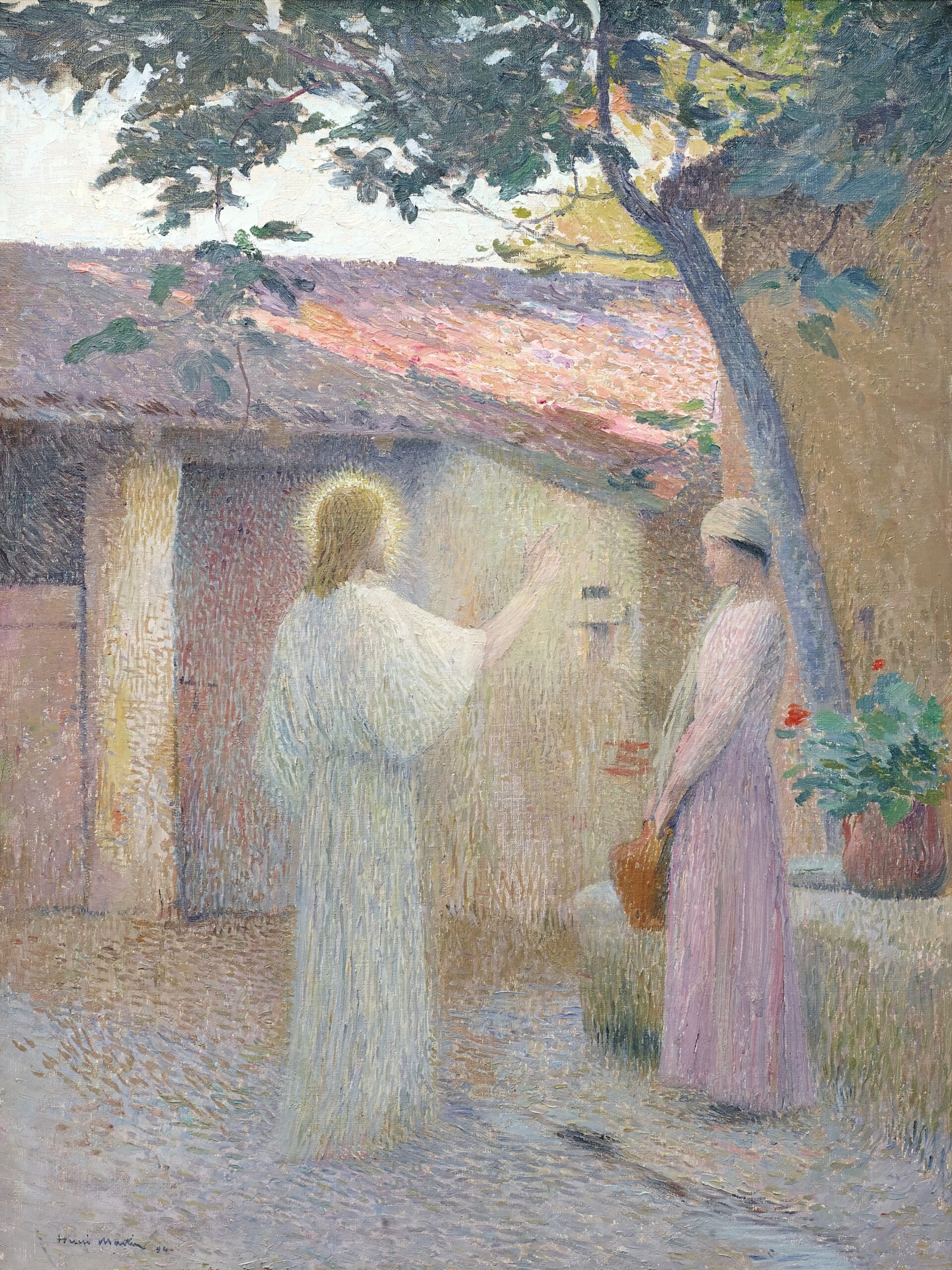
In the Gospel of John 4, we find an interesting story about this well that Jesus tells us. Jesus calls out to a Samaritan woman who is drawing water from a real well called Jacob’s Well: “Give me a drink.” This is the beginning of a conversation between the two, and Jesus uses this as a starting point to tell her what he really wants to say.
Jesus answered, “Everyone who drinks this water will be thirsty again, but whoever drinks the water I give him will never thirst. Indeed, the water I give him will become in him a spring of water welling up to eternal life.” (John 4:13,14)
The woman, hearing these words, realized that Jesus was about to tell her something very important about her life, so she asked him a question about faith: “The Samaritans say that on this mountain we should worship, but the Jews say in Jerusalem.” The question is, where is the place that she should truly worship? If Jesus had answered Jerusalem, the woman would have concluded that Jesus was just another Jew and the conversation would have ended there. However, Jesus’ answer was surprising: “The hour is coming when you will worship neither on this mountain nor in Jerusalem.” Then, in verses 23 and 24, he adds:
Yet a time is coming and has now come when the true worshipers will worship the Father in spirit and truth, for they are the kind of worshipers the Father seeks. God is spirit, and his worshipers must worship in spirit and in truth.”
When the woman heard this, she realized that Jesus was more than just a prophet. Then, suddenly remembering that the Messiah, called Christ, was said to be coming soon, she spoke of it, and Jesus confessed, “I am he who is speaking to you.” She was the only woman, apart from the twelve apostles, to whom Jesus confessed that he was the Messiah. The never-ending fountain of water of eternal life is not a particular mountain or a place called Jerusalem, but worship offered in spirit and truth.
The Apostle Paul explains in Romans 12:1:
Therefore, I urge you, brothers, in view of God’s mercy, to offer your bodies as living sacrifices, holy and pleasing to God–this is your spiritual act of worship.
Why do I always say that worship should come first? Because without it our souls dry up. And worship is not a solemn ceremony held on Sunday, nor is it a lecture where we gratefully listen to the pastor’s sermon. Worship in spirit and truth means that we stand before God face to face. It’s something we should do anytime, with anyone, alone, even if it’s just for a short time each day. That happens during our Sunday worship time when we set everything aside and sing to the Lord with all our heart, with all our mind, and with all our might.
Many Christians believe that the pastor’s speech is the center of worship. That’s why it is called a “sermon” rather than just a talk. But I don’t think so. I believe that the singing that follows this sermon is the “highest point of worship.” This is when we need to be the most serious. It’s okay if you fall asleep while I am talking. You can read the message later. However, if during worship time we do not ask anything of God and do not receive any words that are spoken to us, that would be a great waste.
For example, do you know what happens when I seriously sing the song “More love, More power” with a few people, which I still sing sometimes? It happens that a church is started by a few people who lack love and power, and it continues for more than 30 years, continuing to share the love of Jesus with many people.
So today, as the lyrics of this song say, let us sing to the Lord with all our hearts, with all our minds, and with all our strength.
B. A Family Called the Church
Now, let me tell you one more thing: the church has many functions.
The church can be called a school for studying the Bible, a hospital for healing souls, a temple for holding religious ceremonies, and an antenna shop for showcasing the wonders of products from God’s kingdom.
But these are not the most important functions of the church. The most important thing is the function of “family.” This is because another source of strength for living in love, that is, living in the covenant, is this “family” called the church. Let me read John 19:26 and 27.
When Jesus saw his mother there, and the disciple whom he loved standing nearby, he said to his mother, “Dear woman, here is your son,” and to the disciple, “Here is your mother.” From that time on, this disciple took her into his home.
On this day, Jesus’ mother Mary and his disciples, who were close but strangers, became family. In fact, even earlier, Jesus expressed his thought that anyone who does God’s will is part of his family.
Then Jesus’ mother and brothers arrived. Standing outside, they sent someone in to call him. A crowd was sitting around him, and they told him, “Your mother and brothers are outside looking for you.” “Who are my mother and my brothers?” he asked. Then he looked at those seated in a circle around him and said, “Here are my mother and my brothers! Whoever does God’s will is my brother and sister and mother.” (Mark 3:31-35)
This is Jesus’ concept of the church as a family. The apostle Paul also follows Jesus’ will and calls the church “the household of God” by faith.
Consequently, you are no longer foreigners and aliens, but fellow citizens with God’s people and members of God’s household, built on the foundation of the apostles and prophets, with Christ Jesus himself as the chief cornerstone. In him the whole building is joined together and rises to become a holy temple in the Lord. And in him you too are being built together to become a dwelling in which God lives by his Spirit. (Ephesus 2:19-22)
This family is built on the foundation of Christ and is made up of people from various backgrounds, and it is also God’s dwelling place.
Humans are beings who cannot survive alone. God has placed us in societies of different sizes so that we can all live happily by complementing each other’s weaknesses. We are surrounded by various communities: the globe, continents, countries, regions, towns, and families.
In Japan, a family unit living together is called a household(世帯 setai), and currently the most common type of household is not two-person or three-person households, but one-person households. Currently, it is still under 40%, but it is predicted to reach around 45% by 2050.
Also, even if they are not alone, for various reasons many people do not receive the protection they should receive from their families.
When Jesus finished his earthly life, he entrusted his mother Mary to his disciples. I believe the primary mission of the church is to be a family for those who need it. Of course, this is not to say that our physical families aren’t real families. We are both part of the larger family called the church. However, I mean even if you don’t have any blood relatives on earth, you have a family called the church.
A hallmark of a healthy family is that it doesn’t judge each person by their attributes. No one should be judged on the basis of ability, skin color, nationality, age, education, occupation, status, wealth, gender identity, or sexual orientation. This isn’t always the case in real families, but this family is different. We are no longer strangers and sojourners, but fellow citizens with the saints and members of God’s household.
The blessing of being part of this family gives us great security. Even if no one else does, the fact that we are recognized and loved by God and this family encourages us and allows us to continue loving without giving up no matter how many times we fail.
As members of God’s family, it’s best to have a close family, but you don’t have to be equally close to everyone. When you have many siblings, you will naturally get along with some and not others, and some people will hang out together often, while others will just always be alone. Some love to talk to anyone, and they are always in the living room, while others stay locked up in their rooms. The good thing about family is that it’s still okay.
People tend to feel strongly about their differences, but we must remember that the commonality of loving Jesus and following him makes all differences meaningless.
(Prayer) God, thank you for including us as part of your family.
And thank you for giving me this visible family.
And thank you for giving us the opportunity to worship from our hearts.
In this family, in worship, our souls receive the water of life and can continue to love.
Please use us so that we may keep the Covenant and through us spread your fragrance in the world.
We pray in the name of Jesus Christ.
Summary
We don’t have the love within us to carry out Your Church Covenant. But we make this commitment because God doesn’t just expect us to produce results, He expects us to live with that will. And we have the source of power to grow in love, even if only little by little. That is worship offered in spirit and truth, and the family of God called the church.
For Discussion
1) In what sense is the church a family?
2) What is the essence of worship?